Most AI engagements get the first hour wrong. People show up to talk about Copilot, RAG, or "the agent stack" before anyone agrees on the job to be done.
The first hour I run is a workflow walkthrough. Pick the task you'd be relieved to never do again. We look at how it works today, where it leaks time, and what good looks like. The technology answer falls out of that, not into it.
Side effect: the people in that room become champions, because the conversation finally felt about them.
Frontier-by-default is the most expensive habit in enterprise AI. If a smaller model passes your evals at a tenth of the cost, that's the right answer, full stop.
The discipline is to write the evals first. What does "good" look like for this task: latency, format, hallucination tolerance, tool-use accuracy? Then run the cheap model against it. If it passes, ship. If it doesn't, climb the ladder.
Frontier is for the cases that genuinely need frontier. Not the demo, not the announcement, not the org chart.
The pattern I see over and over: a team builds an AI pilot in isolation, brings it to InfoSec at the end, and watches months of work get torn up.
Bring security in at discovery. Not for sign-off. For shape. They'll tell you what's actually possible inside your environment, what data can flow where, and what won't fly. Build the prototype against those boundaries from day one.
It feels slower for a week. It saves a quarter.
"Adoption is up" is not a sentence. Show me the curve. Daily active users, weekly task completions, retention by cohort. If you can't see those, you don't have an AI strategy, you have an AI announcement.
The instrumentation has to be in scope from the first sprint. Telemetry is unglamorous, but it's the only argument that wins the next quarter of investment.
If the curve goes flat, that's data. Be honest, change the product, change the cohort, or kill it. The worst outcome is a dashboard nobody reads.
Senior Solution Engineer in Dublin, covering enterprise customers in the Swedish market.
I'm the technical lead in the room when a customer is deciding whether AI is real for them or just a roadmap slide. I sit between the account team and the customer's architects, IT, and security people, and I'm the one who has to make the answers add up.
A typical engagement: a discovery call to understand the workflow they actually want to fix, a tailored demo built around their data and their scenario, an architecture session with their IT and security teams, and a written pilot plan with success criteria. After that I stay close through the pilot, help them measure adoption, and make the case for the rollout.
The job is part technical, part translator, part therapist. Most of the time the hardest part isn't the tech, it's getting a room full of senior people to agree on what "good" looks like.
Solution Engineer in Dublin, pre-sales across the Salesforce platform: Sales Cloud, Service Cloud, Data Cloud, Marketing Cloud, and Agentforce.
Ran discovery, demos, and proof-of-value workshops for SMB customers. Partnered with account teams on the largest deals in the region, owning the technical evaluation side and translating customer priorities into business cases the C-suite could actually sign off.
Recognised as Solution Engineer of the Quarter twice. More importantly, learned how a SaaS giant ships AI into a mature product, and how customers actually adopt it once the contract is signed.
Co-founded KORALL Carbon Capture out of Chalmers. Climate-tech venture focused on capturing CO₂ from industrial emissions.
I owned the commercial side: the deck, the investor conversations, the early customer discovery with industrial partners, the partnership outreach, and the founder/advisor alignment that keeps an early-stage venture from drifting. My co-founder owned the chemistry and the lab.
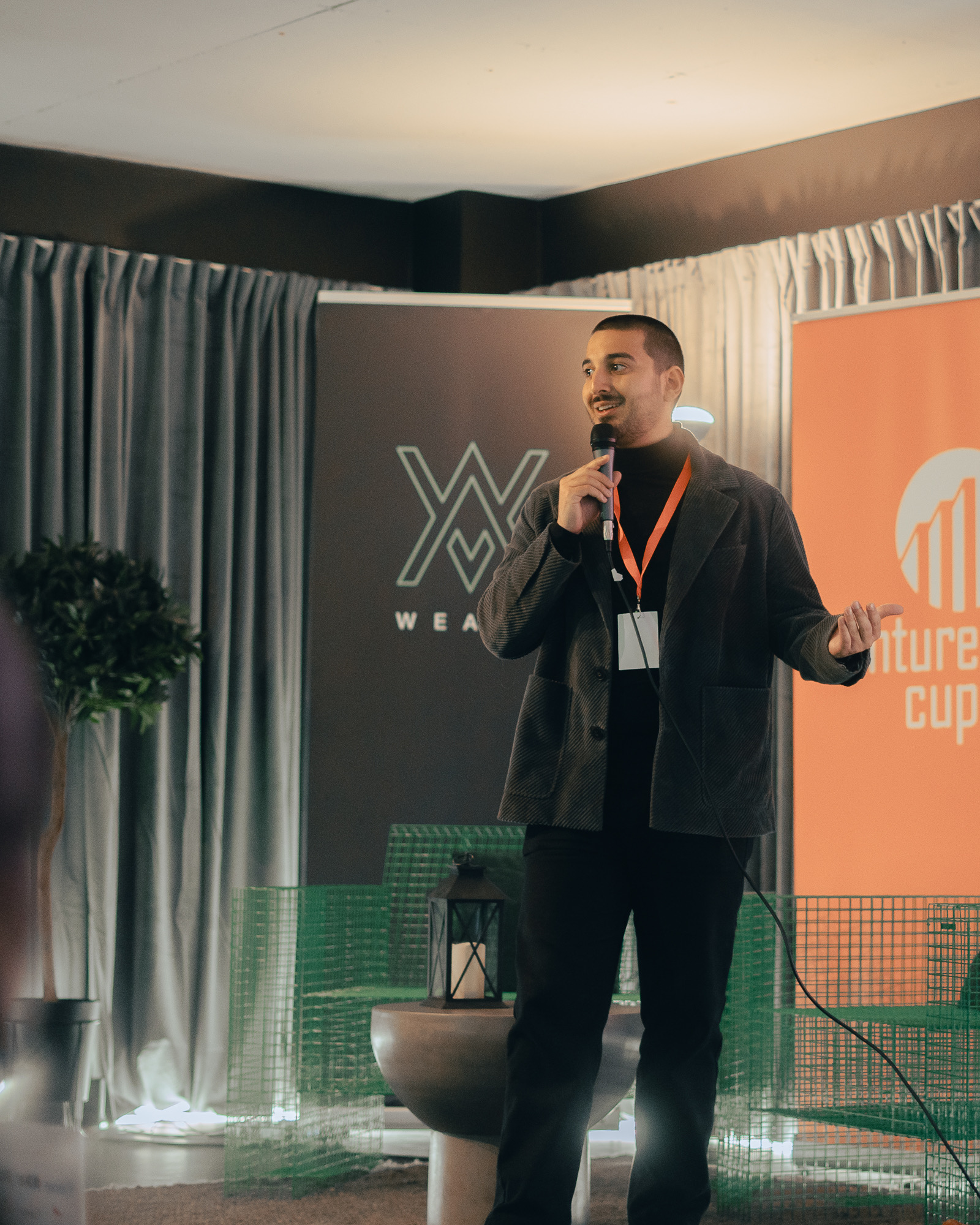
Got to Venture Cup finalist and validated enough demand to know what a real pilot would need. Came out of it convinced that the hardest part of climate tech is not the science, it is finding the first paying customer.
Early business development role in Gothenburg.
Redesigned sales processes, recruitment workflows, and the strategic planning rhythm across the company and its subsidiaries. Turned exec-level priorities into operating plans that the rest of the team could actually run on.
First real exposure to how an organisation works end-to-end, and to the gap between a good strategy on a slide and a team that knows what to do on Monday.



 Dublin · 2026